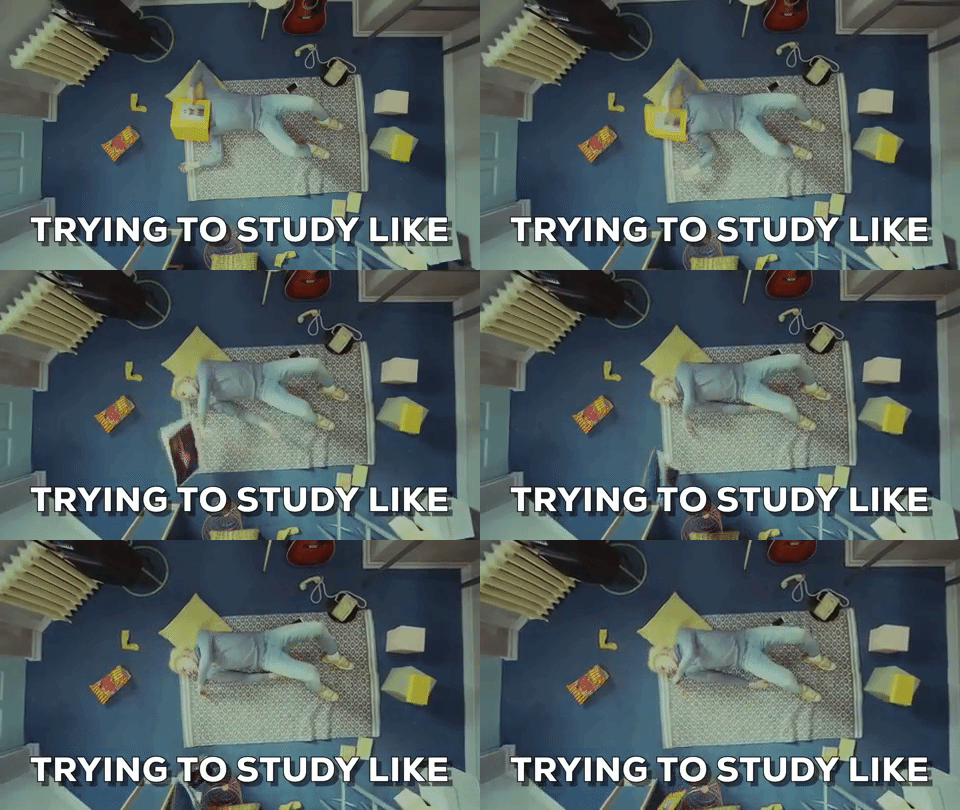
Showing posts with label studying. Show all posts

Top 5 Tips to Manage Online Classes

2020 has been quite the year, and it’s not even over yet. First the Covid-19 Pandemic, then the fight against racial injustices and inequality, and now... just add online classes to your list. 

All of my classes are online this term, which is a change from my previous all in-person courses the past three years. If you’re coming into Coe as a freshman, you should know that we seniors feel for you. Freshman year is your time to have fun and figure out how college works. Now that this game we call “student life” has changed, it’s almost as if everyone is starting over. We’re all freshmen, in our hearts. 


Jokes aside, there’s no need to worry. Despite these changes to our class schedules, locations, and methods, college is still college, because school is school. Many of the techniques we’ve discussed on our student blog (here in the Learning Commons) still apply, and many are more important now than ever before! 


Last spring, I got some experience with online classes when I went back home. Although I’m back on campus, with a hectic schedule, my new habits still serve me well. Here are five ways to ease into online classes and survive your first term in this new normal!


1. Set Up a Study Space in Your Dorm (or home, or wherever you have access too)

Our usual study spots are no longer viable, which sucks, but we’ll just have to make due with what we’ve got! Make sure to keep your academic materials in one place. In the dorms, desks and shelves are provided for you. In the apartments, you’re on your own. Now’s a good time to consider creating some storage space. You could go out and buy shelves, bins, or just use cardboard boxes from when you moved in.


In my case, sticking to a budget is very important. I’m using a few tiny grey bins to hold my school and craft supplies, and a white draw-cart-thingy to hold my books and folders. I purchased a foldable desk that I use for all of my work, and can move it to any room I want. I move my desk lamp (that I hadn’t used since freshman year) to any surface it can sit on. 


All I need to make this study situation foolproof is a proper light and a proper chair. 


2. Schedule break times

It’s important to give yourself breaks since you won’t be leaving your dorm too often. I understand wanting to work on a class for a few hours straight, just to get it out of the way. I do it all the time. However, I always feel refreshed and ready to get work done when I take a nice break. 


Take a quick walk around campus, and breathe in the fresh air. Wave to your friends from at least six feet away (social distancing is important). You can sit by a window and read for fun, or even read a book for another class. Watch TV or play on your phone, just do something to take your mind off that assignment for a few minutes. Then, you can look at your current projects with fresher eyes. 


Without breaks, going from classes to assignments, every day for hours at a time, can become overwhelming rather quickly. If you pace yourself just right, you can balance free time with classes. 


3. Create a Work Playlist

Many students need absolute silence in order to get their work done, but I am not one of those students. I’ve created several playlists, each one for a different mood. Some songs make me want to dance - which helps to keep me active. Other songs allow me to picture myself in a cafe, typing away at my laptop, sipping tea. 


You can switch between silence and noise as often as you wish. The closer it gets to my bedtime, the lower the volume goes, the less music plays, and, eventually, all I want is silence. 


4. Communicate with Your Roommate(s)

Learning to talk to your roommate(s) is a basic life skill you learn in college. You are not clones, so there are bound to be times when your personalities conflict. Different class schedules, different study styles, different sleep styles, different energy levels, different anything, or sometimes everything about you and roommate(s) differ. This semester more than ever before you interact with your roommate(s). 


Normally you’d be apart for classes or extracurricular activities, but now you need to stay together for hours at a time, in the same room. If something is bothering you, I recommend talking about it. If you let it fester for too long, you’ll explode, and that won’t be good for anyone. 


As an example, let’s say your roommate needs to jam to music to get any work done, but they’re also a night owl and it’s already 11 pm. Maybe you can all come to an agreement where they wear headphones and keep only their desk light on. Or maybe they find a new study spot away from people so they can focus on their work until 1 am. Who knows? At least you can say you tried. 


5. Prioritize! Prioritize! Prioritize!

The average college student does not solely take classes and do their homework. No, students are involved in clubs, sports, and other extracurricular activities. Students have work study positions on and off campus, and even work outside jobs here in Cedar Rapids. It’s fun and exciting to try new things and challenge ourselves to be better versions of ourselves, but it also takes a lot of time. The fact is, you won’t have enough time to do everything you need and want to do all the time. 


The semester is just beginning, and it’s tempting to fill up any blank slots on your calendar. That’s the college experience. However, you are still a student and passing your classes is a top priority. Listen to me, I learned this lesson from experience: BURNOUT SUCKS. 


Burnout is when you’re overworked and stressed and boom, your body can’t take it anymore and you crash. I’ve done this to myself multiple times since coming to Coe, and as a senior I can tell you that it wasn’t worth it. I wish I could tell myself to just drop that event or say no to a request, but I can’t change the past. Though, I can warn you not to make the same mistakes I did. 


Take the time you have now to think about what really matters to you. Put those activities in your schedule, then see how much time you have left. Don’t forget to think about eating, sleeping, or relaxing with friends either. You’ll find that you have less time than you thought you did. 


---


I hope your first full week of classes is going well. Back-to-school season can be pretty hectic, but hopefully the tips mentioned in this post can help you get your bearings. 


Gif Source


Study Tips for Biology


Study Tips for Biology

     Here at Coe College, there are so many pre-medicine and nursing students. To be able to graduate in these fields, a lot of biology is usually taken. Our freshman year, for example, most of us have to take Cellular and Molecular Biology (the weed out class). We all struggle in that class, so here are a few study tips that helped me to struggle a little less.

     Biology is best defined as the study of living organisms. Given that there’s such a wide range of living organisms from bacteria/microscopic organisms to the biggest of animals, it can be an extremely hard subject. It’s all more or less just memorization; however, it is a lot to memorize in a short amount of time. Our brains are extremely powerful, but every brain is different, and there are so many ways to learn. Simply memorizing things to get things done isn’t going to work because to actually instill information it needs to be rehearsed in the brain more than once.

That being said, I took and studied notes before class; then when I got to class I recorded the lecture as well as revised my notes. The key to revising was to add and highlight things that my professor elaborated on/ emphasized the most. I did it for every chapter before the exam (each exam was every three chapters). Then, while studying for the exam I made a flow chart to show how each topic was connected so that I could easily make those connections during the test.

Homework really does help, because it gives you the chance to practice everything you’re learning. Also, having a friend to study with so that you can all compare notes and teach each other will help with rehearsal and keeping everything in your brain. I cannot stress this next point enough: TALK TO YOUR PROFESSOR. I couldn’t go to SI Sessions because I had work so often; and I needed money to come up with half of my tuition. If you’re in my shoes, then communicate that with your professor and schedule a set meeting time every week to go over material. It actually helped me.

I hope that these study tips work for you like they did for me; and if you have any other tips then leave them in the comments!

How to Study (When the Sky is Falling)

Gif Source
We only have a month to go! We only have a month to go! It’s the end of spring semester, which is college code for THE FINAL COUNTDOWN. All your assignments are due, final projects, final pieces, final performances, final games, and final exams are all here and coming for us. Right when you think you have free time, BOOM you forgot to write your report due Sunday at 11pm! The sun’s out later and your mood has picked up. Walk around and breath in the fresh air, because you’re going to spend all night in the library. How do you juggle these events? How do you keep from being stressed? How do you study when the sky is falling? Don’t worry fellow kohawks, I’ve also reached level-100 stress, and we will survive this together. Here are five ways to keep those grades up this month.

1. Go for a walk
I don’t care if you go downtown or to the moon, get outside and out of your stuffy dorm. The weather’s nice and some time away from your usual study space will help you de-stress, giving you time to get your head together. Read a book, talk with your friends, meet with your professors, and pet some puppies (puppies forever). The sun has a way of opening up your heart and making you feel joy. If it's raining, put on your boots and bring out your umbrella. This is your break; this is your free time.

2. Do what must be done today
I’ve said it before and I’ll say it again, organization is key. I don’t know about you, but taking the time to write down my assignments and making my checklist helps me moderate my anxiety. I already have due dates noted, but I do have classes where work is assigned daily, and it’s not the kind of work you can get ahead on. I make a list of what absolutely must be done today, then check them off as I go. Get those assignments done on time, it is April after all.

3. Make a list of what to study
What do you need to study for? See which test is soonest, and which one will take the most time. Maybe you can solve equations easily, but the vocab always stumps you. Maybe you only have exams, and you haven’t studied at all for the final. You may not love lists, but cramming the night before is not an effective method, so think ahead.

4. Schedule the time you need
Any gaps in your schedule? Fill them with study times. I work the closing shift two days out of the week, which puts me behind in my homework. It’s a domino effect. Time from work could’ve been homework, and time for homework could’ve been studying. It’s even harder when you need to work to pay for tuition, room and board, and the meal plan, stay alive, clean your room, AND attend class, AND do your homework, AND (yes) study. But if you don’t even try to make the time for it, it simply won’t get done.

5. Pat yourself of the back
Doing your best counts as an achievement. Being a college student is hard. A lot of us are first generation, a lot of us have jobs, and a lot of us struggle to manage our responsibilities on top of these factors. Even so, you’re doing great. I mean it. It’s great to feel the support of the people who care about me, and even complete strangers, so I’m telling you you’re doing great. Keep up the good work, and don’t kill yourself doing it.

I hope you find these tips helpful. This is what I do when I’m most stressed. You can still watch YouTube and Netflix (or Hulu or Crunchyroll), but you know you have to get your work done, and you’ll feel so much better once it is. Remember not to “relax” for too long, I fear you may be procrastinating… Have a nice day!

Studying vs Homework

Image Source

We all do our homework, and we all study, but do you know the difference between the two? Intelligent.com says it best - trust me, those other websites quote it - but I believe my definitions help clear up any misconceptions.

Homework
Homework is time that you must set aside outside of class to complete assignments and projects required for your courses. Certain courses will require more frequent time allotted to complete weekly assignments, while others require none at all. Projects are less frequent but require a lot of time as well. Students might fill out worksheets, write stories, solve problems, or again do nothing at all. Not everyone will be given assignments to complete, sometimes your grade is completely dependent on exams. I have classes that require only a paper or two, but the time I use to write that paper is not studying; I have to allocate time afterwards. I’ve had classes that require reading a lot of pdfs and books, which takes a lot of time, but we don't have tests or quizzes, so studying isn't necessary.

Studying
Studying is time allotted to review class and textbook materials to prepare for exams and other tests. This means that on top of the time set aside for homework, there must be time set aside for review. You’re not alone if you don’t do this. I understand, we have jobs and other commitments that we can’t afford to give up. But, we have to study at some point.

I’ve always struggled to find the time, and just told myself that the process of taking notes is how I study. My schedule was more open last week, and I let go of my bad habits.  When given free rein over my time, I divided my day into sections and completed goals each hour or two. Homework took a lot longer than I expected, but I usually don't have enough time allotted in the first place. Being able to complete my assignments at my own pace was refreshing. You can study before or after you complete assignments, whichever needs to be done first. The goal is to make more time for studying, especially when you struggle with the material.

There are three steps we are expected to meet as students, but most of us neglect the final step until it’s time for a test or exam. 
  1. Taking Notes
  2. Completing Assignments
  3. Studying the material
It’s advising season. Look at the classes available and see what you need. Then decide whether you’ll have time for ALL the other activities currently occupying your time. The struggle is very much real, and you may have to make sacrifices to reach your academic goals. But if you want to prioritize your studies, you have to prepare yourself to change and build good habits. 
I hope this clears up any misconceptions you have about the difference between these two activities. Being a student that goes beyond the bare minimum requires hard work and compromises, but you're doing great. If you'd like to know how I study, click here. If you'd like to know how we should study click here. How do you fit time to study in your schedule? Leave a comment down below!
Giphy Source
Helpful Links

5 Study Habits to Start Now

Gif Source

College students everywhere struggle to balance homework and extracurricular activities. I’ve heard people say, “I study so much but my grade doesn’t improve” and “I think I study too much”. Last fall, I tried five different note-taking methods and hybrid variations. My goal was finding which method improved my exam grade the most. You see, my schedule was pretty much filled with work, so I only had time to take notes and do my homework (sometimes). I enjoy being in class and engaging with the professor and writing new material in different ways. But, homework has always been...tedious.

You've probably had a class that that gave A TON of homework, WAY more than your other classes, so the time you would've spent studying is instead devoted to that. What's worse is when those assignments don't count for anything, and are instead your teacher's way of "helping" you study. You may be an avid note-taker, but it's time to become a pro at studying. Here are some helpful habits, to get you started.

1. Calculate How Long You Need to Study
Once I’m done with classes, work, officer responsibilities, and complete my homework I had around four hours of free time left to study each week. I spent those four hours focusing on whichever exam was closest. Clearly, I did not have time to study. My goal for this semester is to log at least 10 hours a week, and now that my work schedule has changed, I have time to do so.

According to Intelligent, we’re technically supposed to study for two hours per one hour we spend in class (or three hours, depending on your workload) and since we spend three hours in each class each week (9 hrs to 12 hrs total) we should aim for at least 24 hours of studying each week. These 24 hours would be divided into four 3 hours of studying and three 4 hours of studying each week. For example:
  • Sun: 3 hours
  • Mon: 4 hours
  • Tues: 4 hours
  • Wed: 4 hours
  • Thurs: 3 hours
  • Fri: 3 hours
  • Sat: 3 hours
  • Total: 24 hours
10 hours isn’t even half of 24 hours, but it’s a stepping stone. Instead of going all in the first week, I’ll be adding hours in intervals until I reach 24 hours of studying. As motivation, I’ll be eliminating onion rings, cheeseburgers, and hamburgers from my diet. This will keep me focused and help me be healthier. My reward each week will be one soda from the pop machine each week (lemonade is heaven’s water). You don’t have to sacrifice food for motivation, but I am. I know myself, and I want to change for the better.

If you already study 24 hours, good job! Do you study for longer? You may be studying for too long. There is a point in which your brain needs to rest, and it’s not just during sleep. Read more if this sound like you.

2. Mark your Calendars
We’ve gone over the importance of time management, but now it’s time for a test. Do you have your due dates, quiz and exam dates marked? What are your priorities? Did you leave enough time to complete your all your homework before they’re due? How about enough time to study? Now that you know how long you need to study, it’s time to plan how long you want to study. My goal went up by six hours, but how long you need depends on you and your schedule. Make sure you don’t overwhelm yourself, but that you are pushing yourself. Aim for that happy-medium.

3. Time Yourself in Intervals
When it comes to studying, you have to pace yourself to better measure your progress and keep your focus. If you do anything for too long for too often it becomes repetitive and you lose interest. By working in intervals of 20, 30, or 45 minutes you allow yourself to rest and reward yourself along the way. Make sure to read Bridget’s article on the Pomodoro Method for more information.

4. Study in Different Ways
I want to study better, which means studying smarter. What works for one class may not work for the next. Heck, it may not even work for that class after a while. It’s important to find what works for you, get into a routine, and make room for changes when necessary. Read more if you want to know the different study methods and the research backing them up.

5. Study in Different Locations
Dorms are wonderful places to study since they are equipped with desks and lamps, but what if you just can't stay focused? We sleep, eat, and hang out with friends in our dorms, and most of us have roommates which can make things hectic. Sometimes a change in scenery is all you need to revitalize yourself, and stay ahead of procrastination. Armstrong-Douglas lobby was a favorite of mine, my Freshman year, because of the many whiteboards and natural light. The library, classrooms, Upper Gage, and any other place that peaks your interest could be your new study location. The best part is you can change your mind and study someplace else anytime.

Well, this is all the advice I have for now. It’s important to prioritize your work before anything else, and it’s much easier for me to get through all of my work when I change study locations. Feel free to comment down below any of the ways you study. Until next time, have a good day!

Giphy Source


Helpful Links

Setting the Mood: Study Jams

by Arabella Chamberlain
Photo Credit

Looking for some studying music? Look no further. Down below are a few playlists with some of my favorite cram jams. Whether you're bunkering down to write out that 5-page essay or getting hyped up to pull an all-nighter before a midterm (not advised), hopefully, there's something for everyone.


(Disclaimer: These are personal playlists and don't reflect the views and opinions of the
Learning Commons or Coe College. Some songs may contain explicit lyrics.)

Early Bird Pop


Jazzy Afternoon


Evening Country


Late-Night Indie


After Midnight Beats


Photo Credit

It's Crunch Time

Image Source
It's that time of year again. The snow is falling but barely sticking, the sidewalks are salted yet too slippery, and everyone’s either anxious or too calm. Yes, it’s the week before finals week, and everyone’s in a hurry to finish assignments and turn in extra credit work professors have blessed us with. The amount of stress we’ve built over the semester had time to dissipate over Thanksgiving, only to be struck back into us like a bolt of lighting a few days before we leave for the winter. I myself spent the past week having fun and forcing myself to relax to avoid becoming too anxious, but now it’s crunch time and all bets are off! To keep finals from biting me in the butt, here are the actions I plan to take to stay on top of my game.

1. Plan Ahead
Organization is a necessity to get through finals week alive. Events will pop up to fuel you with sugar and love from puppies, but if you don’t make the time to complete your work, you will regret it. To keep from being too overwhelmed try out these tips:
  • Put those finals on your calendar 
    • If you haven’t done so already, you are a crazy person 
  • Write out your homework 
    • When it’s due and when you should do it 
  • Do the extra credit 
    • If your professor has blessed you with the option take advantage of it
2. Eliminate Distractions
Put that phone away! Apps are designed to keep your attention, and if your eyes are glued to Snapchat, so is your brain. You want to be focused on the assignments you must complete, and the best way to do this is to get rid of anything and everything that distracts you from your work. Phones are the big one, since our social media, games, music, videos, and anything else that the internet brings are all at your fingertips. Some people feel that their phone relaxes them, but there’s a difference between relaxation and procrastination. Listening to your favorite tunes may help you get through that paper faster than silence, but Instagram won’t. I struggle to put my phone down when I’m stressed, because I’m desperate to distract myself from my problems, but this doesn’t make the story I need to edit disappear, it simply wastes time. YouTube and Netflix are also major no-nos. Biology and The Office do not mix. Your brain can only focus on one thing at a time, so be nice to it.

3. Balance Your Time
Long study periods followed by no breaks is quick way to drain you of all your energy and motivation. Nothing should be studied for more than an hour at a time, and the longer you study the longer your breaks should be. I recommend working for 30 to 40 minutes at a time with 15 – 20-minute breaks in between. I typically work for 40 – 60 minutes at a time since I prefer to dive right into the deep end. (20-minute breaks work just fine.) If you can’t resist your phone during these breaks, I recommend you set a timer to keep you on track. You can even use these breaks as a pseudo-motivator by sharing with your friends your progress on your assignments and gloat over your new study habits (but that may be considered overkill).

4. Watch your health
Stress can kill you, but so can germs. Pneumonia, the flu, and the common cold are spreading around campus and the heightened stress of the time makes you more susceptible to illness. Help your body take care of you by prioritizing both your work and your health. It’s a nasty habit to only eat junk food every day, but when you’re angry, tired, and overworked caffeine, sugar, and fried foods seem like your best bet to happiness. I know the struggle; my sweet tooth is gigantic. I prefer to be alone when I write, and I prefer to write in my room, so Pub food simple makes sense. One way to curve this bad habit is to drink a ton of water. Most likely, you aren’t drinking enough, so switching your cup of Pepsi for a water bottle will do you some good. Substitute fries for carrots, or onion rings for applesauce. I mean, how can you say no to applesauce?

Go to Sleep
8 am classes are stressful enough, but now you’ll have to wake up on time for finals. This may prove challenging, especially if you’ve been lucky to have none so far. We’re all stressed, which means we’re all tired. Do yourself a favor and give your body the break it needs. This task should prove easier to accomplish when all-day (24-hour) quiet hours are put into place today (Dec 7). Set your alarm to give you enough time in the morning to wake up before your finals. A well-rested student is a well-prepared one.

For help winding down try these tips:
  • Turn off the main lights by 11pm
    • The earlier you turn the lights off, the easier it is to wind down.
    • you can leave a few on, but the later it gets the darker it should be
  • Turn your phone off
    • If you need it as an alarm, plug it in far away from your reach
  • Calm yourself
    • Relax with a good book, calm your breath with meditate , write in a journal 

I hope some of my advice helps you thrive during the week and ease into the holidays. One may be easier to follow than the rest, but they're all great habits that can benefit you in Spring 2019. Leave a comment down below if you have any tips or tricks to get through exams and other stressful times. Have a wonderful break everybody!
Giphy Source
Helpful Hints:
If your phone is an essential aspect of your identity and you struggle to let it go for the week, try out the Forest app. This app allows you to grow beautiful trees (and bushes) in exchange for staying off your phone. If you check an email, call a friend, or do anything except let the app grow that tree, it will die - you will be a tree-killer. It's a great motivator, so check it out. 

Do you struggle with sleep? Do you struggle to wake up in the morning? The National Sleep Foundation has the answers to your many questions, in their quest to help you. 

Not sure how your phones keep you awake at night? This article by Trevor Haynes is for you. 

The End of the World: The Onslaught of Finals

By Arabella Chamberlain

It's never too late to save your grades. You can't give up yet. Sounds cliche, but it's true. (Okay, actually, if you try to save your grade minutes before finals, it may not work.) Honestly, you can always do better in a class until the minute you turn in your last final. What I'm trying to say is, want to make that "D-" a "C+" and pass that class? You can, but it ain't gonna be easy.

When facing the dreaded "finals," what's your attack strategy? Do you:

Photo Credit
a. Panic.
b. Attempt to study. Then, panic.
c. Panic. Then, study. Then, panic.
d. Flawlessly ace every exam handed to you.

(If it's the last one, give me a call. I doubt it is though - Not because I lack faith in you, but because I lack faith in the universe.)

Honestly, a lot of us aren't really that stressed, are we?

Maybe you are though. Finals can be a really intense time. Sometimes we can get too caught up in a percentage instead of our understanding. We should be focusing on putting forth our best work possible, even if that's not A+ material right now. Nevertheless, here are some things to do to make finals a little easier:

  • Study. Well, duh. You all knew that one. However, when I suggest you "study," I'm not just saying sit down for five minutes and flip through your notes. That isn't going to get you anywhere. Instead, make flash cards, find a study group, practice old problems, catch up on unfinished assignments - it really does make a difference when you actively engage in studying.
  • Get a tutor if you need one. (Or even if you don't) Don't be afraid to ask for help. Even if you think you've got it all figured out, it's okay to have someone help check you, just in case you aren't. You don't want to spend a bunch of time studying, only to realize you learned something wrong, do you? It's super easy to get a tutor and they're a great resource while studying. 
  • Talk to your professors about concerns. If you're really freaking, don't. Try to pinpoint what's stressing you out and let your professors know. A lot of professors want you to succeed so many are willing to help. Address the issue early on so you can work together to find a good solution. 
  • Get a good night's sleep. This should go without saying. Yet, how many all-nighters have I pulled in the past? I know it's hard to sometimes just say I can't study anymore because my health is a priority, but sometimes, that's what you have to do. Don't let that be an excuse not to study, but also, SLEEP. Your brain can only retain so much when you've been chugging 5-hour energy drinks for 48 hours straight. Put down the pencil and turn off the lights.
  • Try to eat a little healthier. Avoid all the french fries, potato chips and other snacky foods while bunkering down for finals. You want to be in tip-top shape while taking those last crucial exams and some old candy and chips ain't gonna cut it. Just be a little kinder to your body, maybe even do a little exercise to destress. And don't forget to stay hydrated - It's flu season!
  • Make time for you. Check in with yourself. I know this can be a stressful time, but a little self-care goes a long way. Watch an episode of that one show you always watch, kick back and read a book that isn't assigned reading, take a long, hot shower - you and your roommate will thank you! It's just as important to study hard as it is to take it easy. Find a good balance for you and let yourself unwind. Lastly, don't forget...
  • "C"s get degrees.   But also, try to remember for next semester that Coe offers four opportunities to change the grading scale to pass/fail after your first semester. Set high standards for yourself always, but it's okay if you don't ace every class. Put forth your best effort and hope for the best. You can do this. You got this.
Ultimately, just remember to take a deep breath. This semester's been a little crazy, a little hectic, but don't let that discourage you. It'll hopefully be better next semester, right? Don't give up. It's not like it's the end of the world.

The Sentence Method

Image Source
Congratulations on making it this far in your note-taking journey. We've gone to war with ourselves over whether our notes are truly formatted in the best way for us. To find that answer I introduced Outline Methods, Column Methods, the Mapping Method, and now the Sentence Method. The fights were full of a lot of information and step-by-step processes, but this is the final battle.

The Simple Guide: 
As we've learned, certain notes follow a linear path (from top to bottom), which is perfect for lectures taught in a linear fashion - with topic to topic bullet points. While others follow a non-linear path - groupings of bullet points branching from one another. What they all have in common are short to the point statements explaining the info on the lecture slides. This method is separate from the others for a reason. All you have to do is write each new point on a separate line . You can even number the lines if you want. For lectures, you write what the bullet point and what they professor says about it. You'll have everything on one place. The Academic Skills Center of the California Polytech Institute (CalPoly for short) lists plenty of examples, and cons, to using this method, but I don't think they gave it a fair chance.

Cons: 
  1. Makes it difficult to see which facts are important
  2. Too difficult to review
  3. Too difficult to edit information

Woah! All of these cons are extremely troubling, and now you're afraid to even bother with such a troublesome method. I get it. I understand. But, I use this method for my notes all the time. It's too soon to decide something isn't for you, especially when there are many pros.

Pros: 
  1. Certain bullet points make no sense without a definition
  2. Examples are needed to explain info that won't be understood after class
  3. Can be used with other note-taking methods

The Sentence Method gets a lot of negative attention when compared to the others, but beauty is in the eye of the beholder, and I see both the good and bad. No method is perfect until a research study proves me otherwise. This is why I introduced you to so many different types. You make them your own, to match your writing style and how you study. There are both benefits and costs for every decision, and hopefully you now have the tools to make the right one for you.

Helpful Hints: 
I had a ton of fun researching these different methods, so make sure to try them all out:

The Original Outline Method
The Revised Outline Method
The Column Method
The Mapping Method


Sources
California Polytech State University. Academic Skills Center (Student Academic Services). Note-Taking Systems, 2018, https://asc.calpoly.edu/ssl/notetakingsystems. Accessed 22 October 2018.


The Mapping Method

The methods we've discussed so far are all linear. This is great since lectures are arranged and taught in a linear fashion - Topic A to subtopics 1 through 6, then Topic B and so on. Unfortunately, this is the issue most students have with their notes. Rapheala of Meister Labs posted an article explaining how linear methods tend to be the most popular and widely used, but not the most effective.

Image Source
All information is key information when you're rushing through a long reading, so you copy everything that you read. You write down too much and end up with paragraphs of unnecessary details. At times, it's even difficult to write clear notes in class if the professor zips through slides and talks too quickly. Subsequently, you use the outline methods incorrectly. The column methods can help you separate all those notes by forcing them into separate categories. But you still might not feel that you have sufficient notes when you realize you don't understand the significance of the bullet points and sentences in your notebook. To prevent these issues try out a non-linear method; the Mapping Method is a great start.

Every Tree in the Forest
My high school history teacher Ms. H always reminded us that to understand concepts (both large and small) we need to see the forest and the trees. Chapters of textbooks, pdfs, websites, and lecture slides are all forests. Our notes should display the trees so we can better understand those forests. It's quite beautiful.

Why It's My Favorite
This format allows you to display all the information branching from one key topic. I believe that everyone should take notes the way that's best for them to learn. If that means using a non-linear method, then so be it. Even if it is a bit more difficult to explain than the others.
It's appearance differs between individuals. For example, let's say you are taking Intro to Biopsychology and need to understand the differences between the sections of a neuron. You look through your outlined notes and realize you have a ton of facts listed but nothing connecting the ideas together. What do you do? Well, you can use a linear method like creating a chart (it's really a table) or you can try something original, something you've never dreamed of trying before; you can make a map. Quite frankly, describing how to do this is difficult. CalPoly didn't get into much detail as to how to create one, while MindMeister. wants you to use their application. Each map is different by subject and creator, so I'll tell you the simplest way to get you started.
  • Step 1: Place your notebook (or sheet of loose-leaf) horizontally
  • Step 2: Write the main topic ("The Sections of the Neuron") in the center of the page
  • Step 3: Branch from the main topic your subtopics ("The Dendrites", "The Soma", "The Axon", etc...)
  • Step 4: Branch from each subtopic any key terms or terms that will lead to definitions (from "The Dendrites": "action potentials", from "The Soma": "the axon hillock", from "The Axon": "myelin")
  • Step 5: Branch definitions from the key terms (from "The Soma": "maintains the structure of the cell", from "the axon hillock": "begins the propagation of action potentials")
The finished product will be a large picture showing how the ideas relate to one another. To help you continue from here I recommend checking out MindMeister. They provide in depth examples of how to create mind maps. You can pay for their application, but don't. To create your own, I recommend using MindMapMaker. You can use this to brainstorm ideas for stories and reorder your notes, for example, Biopsychology. If branching your notes sounds too off the beaten path, the Sentence Method may be what you're searching for. 


Helpful Hints
If you decided to check out this method first, and haven't read the others, please start with Intro to Note-Taking. 


Sources
California Polytech State University. Academic Skills Center (Student Academic Services). Note-Taking Systems, 2018, https://asc.calpoly.edu/ssl/notetakingsystems. Accessed 28 August 2018.
Raphaela. “Effective Note Taking in Lectures and Class Using Mind Maps”. The Creativity and Productivity Blog (Mind Meister Labs). N/A, https://www.mindmeister.com/blog/effective-note-taking/#. Accessed 16 October 2018.

The Procrastinator's Midterms Survival Guide: How To Make It Out Alive


Photo Credit
By Arabella Chamberlain

As the dreaded end-of-the-world - uh, I mean... "midterms" approaches, the stress levels on campus are rising... unlike our GPAs. As we try to cram in two papers and some last-minute studying before fall break, do you ever wonder if there's a better way to get through midterms?

If you're looking for a good laugh before midterms, check out this: Studying For Midterms As Told By GIFs
If you're looking for some actual tips on how to survive midterms though, look no further! While this time of year can be daunting to even the most seasoned professional, there's no need to fret if you just try your hardest, put in the work and follow some of these helpful tips:
Photo Credit

  • BE PREPARED. I know you all immediately thought of Lion King just then, but I'm serious. Don't go into midterms thinking you'll just float on through without doing any real work. Be prepared to get into the nitty-gritty of your classes. Make sure, before you even get to the midterm, you're all caught up on any past assignments, even if they're late. If you can still turn them in for credit, go for it, but even if you can't, maybe ask your professor for feedback so you can still learn from your mistakes.
  • OPEN A BOOK. Even though you might've never even cracked the spine on your textbook yet this semester (or any semester, for that matter), if you're struggling with a topic, maybe take a peek. Who knows? Maybe that over-priced stack of papers can do you some good this semester. It can be really beneficial to reinforce tricky concepts sometimes. Or maybe you've been ignoring those assigned readings? At least skimming through the text could save you from a surprise question about something only mentioned in the textbook, not in class.  
  • MAKE A PLAN. Don't just attack your assignments and study time recklessly. Think through what work you need to get done by when and prioritize your time. Be aware of what deadlines your assignments and papers have and set out a schedule for them so you don't lose focus. If you feel too overwhelmed, just remind yourself to work on one task at a time.
  • Photo Credit
  • GET AHEAD OF THE GAME. I know you have a thousand other things on your plate, but try to start study early when you know a big exam is coming up. Don't set yourself up for a night of panic as you try to learn an entire chapter of Calculus in one night. Instead, review a couple topics and concepts each day leading up to the exam. Make flashcards for your Psychology exam. Do some practice problems for Calculus. Explain a tricky concept in Cell & Molec to a friend. Even if this just seems like one more thing on your to-do list, it'll help you feel much more prepared on exam day and you'll hopefully feel less like this at 1 AM the night before:
Photo Credit
  • TALK TO YOUR PROFESSORS. If you're really stumped on a problem or can't wrap your head around a concept, there's nothing wrong with stopping by a professor's office hours to get a little more help. Your professors are here to help you learn, but if they don't know your struggling, how can they help? Let a professor know you're really struggling and ask for additional practice or readings to help cement the concept in your head. ANOTHER OPTION: It's never too late to get a tutor in the Learning Commons. Come by the Coe LC and talk to someone about what you can do to stay on top of your coursework. You may be able to have a weekly tutoring session, which is helpful long after midterms!
  • FIND A STUDY GROUP. Talk to your friends in your classes. Chances are, you aren't the only one stressed about that big test coming up. See if a few people want to meet up in the library to study. Or maybe work to come up with a study guide together on Google Docs and share it with one another so you can all help fill in the gaps. Having a study group not only gives you someone else to talk to about hard material, but also gives you someone to hold you accountable to studying when you say you will. Don't be shy - reach out!
Photo Credit
  • TAKE CARE OF YOURSELF. Get some sleep. Eat well. Drink some water. Check in with yourself. It can be really easy to forget sleep until 4 AM because you had to finish that paper, or skip dinner because you zoned out on this really hard problem, but things like this never end well. It's crucial when you're stressed to take care of yourself. Otherwise, you risk being so burned out leading up to midterms that you sleep through your 9 AM exam! Your body needs fuel to get you through those three exams and a paper - "Student cannot survive on caffeine and potato chips alone."
  • DON'T STRESS. I know it's easy to freak out and think you'll never make it out of midterms alive, but midterms is really only as stressful as you let it be. Be confident in yourself. You made it this far already - YOU'RE HALFWAY THROUGH THE SEMESTER. You read that right. Just believe in yourself! 
Good luck to everyone on any midterms coming up or recently taken  - although, after this article you don't need any luck! Let me know in the comments if you have any other great midterms survival tips. Hope you had a fun and safe fall break!

More Information:
Coe College Learning Commons

The Column Notes Method

Image Source
During fall semester, freshman year, I took Research Methods. Using the Original Outline Method for my notes, I copied the lecture slides word for word. I know I would've had a much easier time studying for tests and exams if I rewrote the information from both the slides and his lecture in my own words, in a format that clearly displayed the information. Back then, if I knew of all the different ways to take notes to take notes, I would've used the Column Notes Method.

The Topics Method

StudyRight.net says that students who have an interest in learning how to take better notes, tend to get this method down more easily than their peers. Also, only 5% of students use this as their preferred method, so there’s that too. For the normal column method, you fold your paper in half and label one side Topic A and the other Topic B. You decide what you put where and how you put it. That doesn’t help you know what should go where, so, fortunately, FacingHistory.org gives more details. A typical technique is to use the left side for key ideas and the right for your responses. You could also outline on one side, and write the definitions of key words on the other.

                   Key Ideas : Response
                   Outline Notes of The Nervous System : Diagram of a Neuron
                   Terms and Definitions : Examples of Terms (in Use)


This method is perfect for lectures, because you aren’t just copying the slides word for word (which defeats the point of taking notes). Instead, you write down what your professor says about the information and have space to add in extra bits—questions you have, points you missed—on the side. Now, this is my preferred method for my Intro to Biopsychology notes. Seeing that line in the middle of the page immediately creates a clear separation of the information, so I have two sides devoted to specific topics.

The Cornell Method

I’m positive you've heard of this ever popular method, and were even told to try it out at some point. In my high school, I was the only one who was never taught how to use the Cornell Method, so naturally that became an issue, right? Nope. One of my teachers printed out a sheet explaining how to divide my paper and what to write where, but it didn't help; I never liked the idea of having to use a ruler and plot out where things go before I start writing. Nevertheless, teachers everywhere claim it's the "best" note-taking method, so here's how to do it.
  1. Divide your page into 2 ½ in. X 6 in. margins
  2. Write down key information (as with all notes) in the 6 in. column
  3. Write down any questions you have towards the material in the 2 ½ in. column
  4. Follow the five-step process from Cornell University:
    1. Record
    2. Questions
    3. Recite
    4. Reflect 
    5. Review
The CalPoly Academic Skills Center (ASC), claims that there are no disadvantages to using the Cornell method for your notes, since it’s a “do-it-right-in-the-first-place" system. But, I can think of a few. For starters, the Cornell method is not for everyone, and there is no data proving otherwise. I found no surveys or opinion polls, nor observation or case studies. There is nothing that shows that students prefer to take notes using the Cornell method, have an easier time studying from their notes if they are Cornell notes, nor receive higher grades on their tests. 

The Charting Method (It's really a Table)

It makes perfect sense. since students who prefer to separate information using columns may opt for pushing it a step forward and create charts. They prepare their notebook paper before lectures by reviewing the slides and deciding where they will put specific notes. In fact, CalPoly ASC claims that it "reduces the amount of writing needed" and that it's "easy to review". I can't disagree. 

For example, let's say you have a Biopsychology class. Your professor graciously posts the lecture slides before class to Moodle and you see that there is a ton of information that you'll have to record during the lecture. You could wait until day of and record the information as it comes, or you could look over the topics and create your chart - it's really a table but CalPoly's titled it "charting". This is another method that's claimed to have no cons - I'm seeing a pattern - but , once again there are of course drawbacks to every method.

When it comes to lectures, unless you have access to (or the time) to look over the slides before class you cannot create your columns. Multitasking is a farce. Could you create the chart (table) while recording from the slides, while listening to the lecture and recording what the professor is teaching? If you can you are a miracle worker.

What to do Next?  

Many students aren't linear learners - meaning they need to record and review information from top to bottom. They instead prefer to map out their notes, allowing the ideas to pop out from key points and connect together. If this sounds like you, then the Mapping Method should interest you.


Helpful Hint: 
If you want to know more about the difference between a table and a chart check out The Difference Between. 


Sources
California Polytech State University. Academic Skills Center (Student Academic Services). Note-Taking Systems, 2018, https://asc.calpoly.edu/ssl/notetakingsystems. Accessed 28 August 2018.
Emelda M. "Difference Between Table and Chart." DifferenceBetween.net. September 6, 2011 < http://www.differencebetween.net/science/mathematics-statistics/difference-between-table-and-chart/ >.
Facing History and Ourselves. “Two-Column Note-Taking”. 2018, https://www.facinghistory.org/resource-library/teaching-strategies/two-column-note-taking. Accessed 28 August 2018.
Skylar Anderson. “4 Effective Types of Notes to Try Note-Taking In”. StudyRight. 2018, https://www.studyright.net/blog/types-of-notes/. Accessed 28 Aug. 2018.
The Learning Strategies Center. Cornell University. The Cornell Note-taking System, 2018, http://lsc.cornell.edu/notes.html. Accessed 28 August 2018.

The Revised Outline Method

In my previous post I explained how to use the good ol' Outline Method for your note-taking. The problem most students have with this method is that roman numerals are confusing. Their focus that should be on recording the information (from lectures and textbooks) in a way that clearly displays the key points, is instead on remembering the order of I's and a's. This is where the Revised Outline Method comes in.

Very Different

Image Source
You create the key to organize information. Maintaining "proper" note-taking form and using roman numerals may not be your style. I prefer to draw shapes that I fill in with ink of different colors. Even Arabic numerals (1, 2, 3) and English letters (a, b, c) are better, plus you can alternate between colors. The action of tracking what each symbol means for your code helps you recall the information more easily. Using colors was prohibited when writing my notes in both grade school and high school. My teachers (except one) felt it was distracting. My AP Brit Lit (British Literature)/ AP Psychology teacher Mr. J - he taught both - allowed me to use whatever colors I wanted (which were navy blue, purple, and pink). It makes sense that Mr. J accepted my methods in the 12th grade, since no research has proven that not using black ink causes you to learn less easily. This means you can write in blue, pink, or purple; colors won't make you less likely to remember information.

Yet Very Similar


Image Source
Students can fall into the same traps with all note-taking methods. The difference is that both the Original Outline Method and the Revised Outline Method make it immensely easier. Copying lecture slides and textbook definitions word-for-word is extremely inefficient. By creating you own key, you decide what goes where and how the information is separated. Remember keep your indents consistent, and rephrase text so you understand how the terms relate to one another. I mean, you take notes so you can study from them. No one wants to read through chapters and slides weeks after they were taught in class.

Helpful Hint:
I could not tell you enough times: both outline methods require time-management. You have to actively think about what you’re writing and try to re-word and condense it. If you find that you just don’t have the time for such detail, or know you can’t follow lectures by outlining, then Column Notes is what you need.


Sources:
Skylar Anderson. “4 Effective Types of Notes to Try Note-Taking In”. StudyRight. 2018, https://www.studyright.net/blog/types-of-notes/. Accessed 28 Aug. 2018.

Intro to Note-Taking

Image Source
Freshman year was difficult. I can't say I wasn't warned in high school that college would be difficult, but I did expect it to be easier. I took mostly AP classes, won awards in most subjects, and graduated Salutatorian. But then, I got my first C's since the third grade. I'm really trying not to be dramatic, but I had a heart attack. " What did I do wrong?" and "I'm just doing what I always do" were thoughts that roared in my mind. I was a failure (In my family C's = F's, okay). 

Imagine it's now May 2018. You just survived your first year of college and spring semester turned out to be harder than the fall, yet, even with all the turmoil of finals you've managed to earn straight A's. Do you spend the summer recovering from the most stress-inducing trial in your new adult life? No! You get two jobs and read books in your spare time at the public library to learn how to better yourself. Maybe that's just me, but the point is I know I could've done better.  

Most college students focus on developing better study habits to improve their grades. Obviously, studying is essential, but learning is a multi-step process. The step I was missing that first semester is taking good notes. Before I take you on this note-taking journey, please ask yourself these three questions. 

Is what I'm doing now working?

The Intro to Anthropology class I took last spring is the staple example for why I take note-taking seriously. For that class I read textbooks, listened to the professor’s lectures, and applied what I learned to the in-class activities. I excelled in everything but the quizzes; they’d come back with 3/10 marks. Half the time, I had no idea what the questions were even asking. That first quiz is when I should’ve accepted that whatever I was doing was clearly not working. 

How do I learn what is being taught to me?

How do you learn?—meaning how do you understand and retain the information being taught to you? There are myriad ways you can learn, and it can differ by course subjects, project topics, the season, or how tired you are. Once I realized I wasn’t learning what I was reading—and spending two hours a night taking notes on—I decided to switch things up.

What should I do now?

This question is why I have written this very article you are reading! My goal is to help you make the most out of your time here at Coe so I read blogs, books, and university websites to create for you a list of the top note-taking methods (linked down below). Hopefully one or all of these methods will you lead to note-taking greatness!


Helpful Links:                            
The Outline Method
The Revised Outline Method
The Column Method
The Mapping Method
The Sentence Method

Just Posted

A Fresh Start: Embrace the Spring Semester with Library Resources

 ðŸŒžAs we settle into the second semester, it's the perfect time to hit "refresh" and embrace new beginnings. The cold winter m...