How Personality Type Can Affect Learning Style

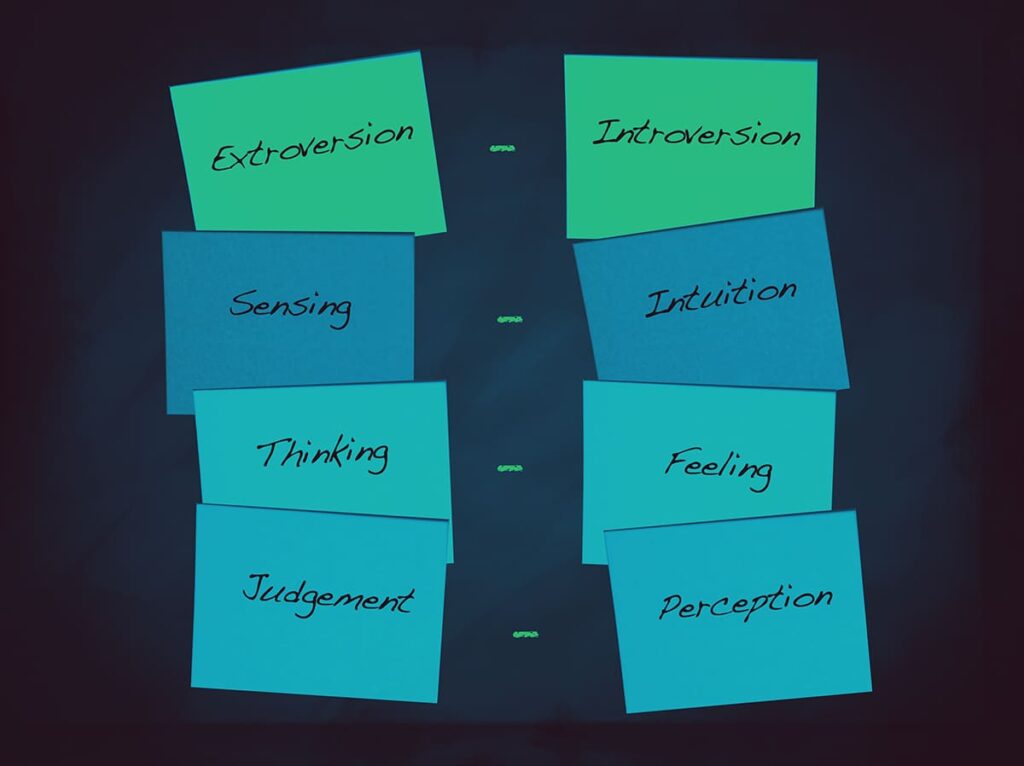
Have you ever heard of the Myers-Briggs Type Indicator? It’s a self-report quiz aimed at assigning personality type according to four categories. It does this by examining how people perceive the world and make decisions based on their answers.
Myers Briggs and the 16 Personalities | Greator
Image Source


What are the four categories? 


  1. Extroversion vs. Introversion (E v. I)


I’m sure many of you have heard of these before and probably have a good idea about which side you lean towards. But what exactly do they mean? An introvert gains energy and motivation by focusing inward. They prefer to think things through on their own and become drained when working with large groups and meeting lots of people. This doesn’t mean introverts don’t like spending time with people; they just need to have more breaks to spend time alone. An extrovert gains energy by focusing outward. They learn and process information by talking with others and become energized when working with lots of people. As with any of these categories, it isn’t a complete either/or. It’s a scale, and you may be somewhere in the middle. 


  1. Sensing vs. Intuitive (S v. N)


Sensors are concrete thinkers. They focus on facts, events, and details and enjoy practical, hands on work. They don’t like theories, ideas, and concepts, relying on life experience instead. In contrast, intuitive people like theories, ideas, and concepts and enjoy looking for meaning behind things. As abstract, creative thinkers, they have low tolerance for routine work and are focused on the “big picture.”


  1. Thinking vs. Feeling (T v. F)


Thinkers value logic and reason objectively when making decisions. They are task-oriented, tend to be more competitive than cooperative, and prefer to separate emotions from work. On the other hand, feelers make decisions based more on emotions. They value relationships and compassion, emphasize personal connection and tend to seek supportive work and academic environments.


  1. Judgers vs. Perceivers (J v. P)


These are two different self-management styles. Judgers are very organized and structured. They are decisive and prefer to plan ahead. Contrary, perceivers like to leave things open ended and wait before making a decision. They embrace spontaneity and love freedom and flexibility. 


How can these personality types affect your learning style preferences?

Understanding your learning style preferences can help you acquire knowledge and study more effectively. As seen in the descriptions of the four categories, there are some general preferences, but they may differ between the combinations of the categories.


A Food Gift Guide For Every Myers-Briggs Personality Type // Mouth.com
Image Source


The Sixteen Types:

  1. ESTJ - Their interest in learning a topic is motivated by solving problems. They are analytical and driven to gain practical experience to apply what they learn.
  2. ISTJ - They do best through hands-on work and repetition and prefer structured academic environments with a steady routine.
  3. ENTJ - They also like structured and competitive learning environments but not a rigid routine. They prefer having overall structure where they can still take an independent path and enjoy exploring abstract ideas along the way.
  4. INTJ - They make excellent independent learners and typically enjoy studying theoretical concepts. They do better with memorizing information by creating connections, analogies, or acronyms rather than just repetition.
  5. ESTP - They thrive in competitive environments with contests and rewards. Learning best through hands-on experience with logical, practical instructions, they need breaks from sitting at a computer to be active.
  6. ISTP - They also like hands-on work and learn better through real-life examples. Being very independent, they prefer to study and do projects on their own. They also prefer flexibility over a highly structured academic environment.
  7. ENTP - They prefer learning environments where they can explore and have freedom to ask questions and discuss concepts. Therefore, they tend to struggle more with highly structured learning that revolves around lectures.
  8. INTP - Their interest in learning a topic is usually driven by a desire to figure out complex problems or theorize. They excel at noticing flaws in logic and are good at asking engaging questions. In addition, they prefer analyzing things on their own rather than group work.
  9. ESFJ - Learning best by working with others, they thrive in learning environments where structured collaboration is encouraged. They like real-life examples and hands-on work with opportunities to engage with others.
  10. ISFJ - They appreciate a highly structured learning environment with clear steps, expectations, and instructions. They also absorb details fast and do well with repetition and memorization tasks.
  11. ENFJ - Common academic interests for them surround solving people-related issues. They prefer a positive, collaborative environment making them good facilitators in group work. Brainstorming ideas and thoughts out loud with others helps when studying.
  12. INFJ - They enjoy structure with some flexibility in a learning environment. Analogies or acronyms typically work better than rote memorization, and they like plenty of alone time to process information before discussing their ideas with others.
  13. ESFP - Their interest in learning a topic is typically driven by their enjoyment and how using the information could help or bring joy to others. They also learn well interacting with people and doing hands-on work such as "on the job" training.
  14. ISFP - They are highly independent learners who enjoy flexibility to explore and try different approaches. They appreciate hands-on learning with experimentation.
  15. ENFP - They appreciate opportunities to brainstorm and discuss ideas with the teacher and other students, and they like hearing and learning about different perspectives. It's also helpful for them to get personal feedback on their work.
  16. INFP - They enjoy a collaborative learning environment as long as they have had enough time to get to know the other students a bit. However, they're still drawn to privately processing information, and they typically enjoy work that allows them to be creative.
Those are just brief introductions. If you want to learn more about your personality type's preferred learning style, check out this website.

Take the test!
Or go to Coe's C3 webpage and use the TypeFocus assessment tool. This test uses components of the Myers-Briggs Type Indicator as well as the Strong Interest Inventory (career interest assessment).

Sources:
“The Learning Styles of Every Myers-Briggs® Personality Type”


Learning Commons Resources- Requesting a Tutor, SI, RAS, and more


Your go-to space for info on all of the educational assistance programs at Coe!


Here is some go-to information on how to request a tutor, how to become a tutor, what SI sessions are and where to find them, what is and how to RAS, and what you can do with the writing and speak out centers.

Requesting a Tutor

Tutoring is available to Coe students at no charge and any student may request a tutor for any class. Tutors are assigned through paired matches and/or through tutee self-scheduling on WCOnline, and are available on a first-come, first served basis. All tutoring is contingent on tutor availability. 


The earlier a student seeks tutoring support, the more likely it is that the tutoring will have an impact on learning and performance, and the more likely it is that a tutor will be available. Tutoring may be an appropriate academic support for you when you are attending class regularly, and:


  • You are having difficulty keeping up with the pace of the professor
  • You feel confused after class when reviewing your notes
  • You are consistently unable to figure out how to complete out of class assignments
  • You are experiencing feelings of anxiety or frustration related to the class
  • You find yourself repeatedly putting off preparing for class


Spring 2021 Tutor Request Form
Scheduling with your tutor


Becoming a Tutor

Peer tutors are available to help students in most academic courses. Tutors must have successfully completed the tutored course, received faculty approval, and participated in tutor orientation. Tutors are paid, but there is no charge to students for tutoring services. Tutors have control over their schedules, and appointments may be scheduled during the day, in the evenings and on weekends, and take place online unless requested by you and accepted by the tutor.


Coe needs you! Tutors are needed for all subjects, particularly in math, science, and business courses. Earn money while sharing your knowledge and honing your interpersonal skills. You do NOT need to qualify for work-study to be a paid tutor. Tutor hiring will take place prior to and within the first couple of weeks of each new term. Click below to submit your application to become a tutor.

Become a tutor!


=========================================================================

SI (Supplemental Instruction)

Did you know that SI is going digital this year? Now you can get information and help from any of the SI leaders on campus from the comfort of your study space on Discord.


This discord is specific for those students who are in classes that have SI sessions. You can reach out to your SI Leader or Shanna Pikora, the program coordinator, at spikora@coe.edu and ask questions about your classes/SI in general.


This semester, there are SI sessions for OE Biology, Genetics, general Chem 1&2, Basic Physics, general physics, social criminal justice, intro psychology, and biopsychology.


If you haven’t checked out your Supplemental Moodle Page yet, go take a look!

Each course that has SI Sessions has a Supplemental Moodle Page -- run by your SI Leaders. You can find SI information, Zoom links, materials, and so much more on these pages! Be sure to check it out!

If you don't see the Supplemental Moodle Page on your Moodle Dashboard, be sure to email your SI Leader right away!


======================================================================

RAS form

Are your classes making you crazy? Maybe you aren’t sure exactly what to do when you sit down to study, or you aren’t managing your time well and things aren’t getting done. Maybe you’ve missed some classes and you aren’t sure what to do about it. Let the Learning Commons connect you to the support you need! Make a request for academic support by clicking here.


======================================================================

Writing center

With sixty peer consultants from just about every major on campus, we are an eclectic, creative and energetic group, ready to assist with writing projects of all kinds.


Our goal is to engage our community in conversations about writing; to that end, we not only help students with a particular writing assignment, but we strive to help them become more effective and confident writers.


We are located in Stewart Memorial Library, as part of the Learning Commons, and we offer conversations about any kind of writing at any stage of the writing process. Whether you need a sounding board, feedback or coaching, we are here for you.


No appointment is necessary to make use of this free service, but if you want to work with a particular consultant, or want a conference during our peak hours (mid-afternoon through mid-evening), you can sign up for a conference through our online scheduler or call the Writing Center at 319.399.8743 to set up an appointment.

Coe Writing Center Hours:

Monday-Thursday: 8:00 AM - Midnight

Friday: 8:00 AM - 5:00 PM

Saturday: Closed

Sunday: 11:00 AM - Midnight


===================================================================

Speak out Consultants

We offer individual consultations (walk-in, or by appointment), classroom workshops and campus events aimed at developing speaking skills within a variety of contexts — public presentations, ceremonial speeches, classroom discussions, interpersonal conversations, group meetings, interviews, etc. Our consultants educate students on how to communicate ideas persuasively and empower them to use their voice to succeed in their classrooms, communities and careers.


Faculty and staff also use the center and participate in teaching and learning workshops that address how to integrate oral communication into any classroom.


Services include:

  • Consulting students on individual/group presentations, including brainstorming, outlining and delivering. 
  • Offering feedback on presentation rehearsals.
  • Conducting workshops and delivering presentations on various oral communication topics to classes and groups.
  • Assisting all students in oral communication- discussions, conversation, presentations, etc.
  • Organizing and hosting oral communication related events.


SpeakOut Consultants are part of a larger group of peer education support available through the Learning Commons. Stop by the peer-to-peer academic support space to receive academic support, knowledge and skills from experienced students. Available most hours the library is open on the main floor of the library, or virtually via Discord.

Spring 2021 SpeakOut drop in schedule (also available by appointment outside of these hours):

Sunday: 7:00-9:00 PM (virtual)

Monday: 5:00-7:00 PM (Library), 7:00-11:00 PM (virtual)

Tuesday: 5:00-7:00 PM (Library), 7:00-9:00 PM (virtual)

Wednesday: 5:00-7:00 PM (Library), 7:00-9:00 PM (Virtual)

Thursday: 5:00-7:00 PM (Library), 7:00-9:00 PM (virtual)

SpeakOut Consultants are available by appointment by contacting:

speakout@coe.edu or filling out a request here.


Hot Tips to Stay Motivated


  1. Try to get things done before your already packed day

Space out your tasks so that they don’t all pile up on one day where everything is due tomorrow. Even tackling some of those smaller tasks will make your busy day way easier.


  1. Treat Yourself

If you are struggling to get motivated, plan a reward for yourself after the completion of each task. This could be a tv show episode, 15 minutes on Tik Tok, food, or anything else that you want to do that you are using to procrastinate right now.


  1. Prioritize your tasks

When you are feeling overwhelmed by a mountain of work, take some time to prioritize what is most important to get done right away. Move anything throughout the week that can be, and when you can, put easier tasks at the beginning of the list so that you can quickly start to get things done and feel accomplished.


  1. Have a study buddy

Can’t seem to motivate by yourself? Grab a friend or classmate that isn’t too distracting to you and get to work! You’ll find that breaks will be built in while you’re chatting and you can set goals together to get a certain amount of work done.


  1. Save or post a few motivational quotes or videos to come back to

Add some quotes you find inspiring to your workspace, or a playlist to come back to when you are feeling unmotivated. This could also take the form of posting your goals so you are constantly reminded why you are doing this.


  1. Check Off/Track Your Progress

Form a to-do list so that you can get the satisfaction of crossing things off and keep track of your progress!


  1. Layout your goals and the why behind them

What are your goals? Why are you doing all of this hard work in college? Write down what your goals are and why they are your goals. It’s easy to get off track when we forget why we are doing something.


  1. Break it down into smaller achievable tasks

If a task or project feels too overwhelming or impossible, break it down into smaller tasks. Sometimes this includes obvious steps, but laying it all out makes a larger project seem more manageable.


  1. Make it a friendly competition

Make it a competition with your friends or study partners to get the most done, or to get the best grade. For those who are naturally competitive, this can act as the ultimate motivator. Just remember to celebrate regardless of the results.


  1.  Reframe - think positive

Practice reframing your mindset when you are stressed out. Instead of saying “This is too much I can’t get it done”, say “I have a lot to get done today but I’m confident I will get it done.” When we make the choice to think of everything as being terrible it will be, but if we choose to think positively about things, not only will it seem much easier but it probably actually will be.


Financial Stability as a Form of Self-Love (Part 2)


“I want freedom and stability... a very big life made up of the very small things.”
~ Meg Fee, 
Places I Stopped on the Way Home: A Memoir of Chaos and Grace


I came to college with the understanding that when I turned 18 I became an adult, and have spent the past four years learning how to act like one. I’ve made substantial progress, going from wasting the precious money I earned and saved (while in high school) to earning back those savings, and taking action (in the present) on the behalf of my future expenses. 

Last February I wrote my first self-love post, focusing on the importance of prioritizing one’s financial goals as a form of self-love. I wrote:  “I learned that accepting who you are in the present, who you were in the past, and understanding that you have power over who you are in the future is my definition of self-love”. The heart of the matter is that our finances play a much larger role in how we function in society than FAR too many people are willing to admit. As adults we have to, at the very least, acknowledge where we stand. Only then can we decide where we want to be, and figure out how to get there. 

For reference, my definition of financial stability is “non-fluctuating money”. When your bank account hops from a negative balance, to all of your monthly earnings, to zero it’s obvious why you’d be stressed. Having to worry about whether or not you can afford college, textbooks, supplies, food, and anything else is stressful. However, if the balance remains steady despite your income and expenses, that stress is alleviated, and you’re able to focus on the things that make you happy.

 I can’t put into words the feeling of satisfaction I have, the power I feel when I take control of my destiny by not being afraid of spending my hard-earned money on necessities. There are so many people out there who have far more to worry about than I, so I try to remain humble and recognize where I stand. There are also people who have always been better off than I’ve ever been or ever will be, and I have to accept that my mission in life is NOT to keep up with the Joneses, or Kardashians, or anyone else! I look back to where I used to be, and sometimes I was better off before. Still, I’m proud of myself and will continue this journey, trying my best whenever I am able. 

As students, our academics and extracurriculars take priority, however we do not exist in a vacuum, and the “Coe bubble” will pop ー if it hasn’t already. This is why it’s best to get comfortable with your finances while you have the cushioning of not paying for your own utilities. 

Let’s do an activity: 
  • Go to my.coe.edu and log in. 
  • Select the “Student” tab
  • Click the link for “Student Accounts Information”
  • Select “Course and Fee Statement”
  • Select “Generate my Course and Fee Statement”
  • Select “View my Course and Fee Statement”

Next, look through your Course and Fee Statement. It doesn’t matter whether you paid all, or none, of your tuition and fees. What matters is that you see how much your education is worth and learn to get comfortable with those numbers. I understand that money can be scary to many people, so alleviate that anxiety through exposure. The more you avoid what you fear, the scarier it will become. 

You may feel nervous looking at those thousands of dollars attending this college cost, or you may feel excited because you’ve been waiting to finally have adult responsibilities. Either way, it’s important that you accept your current feelings towards your finances, so you know where you’re starting from. 

There will be times when you are in a good place, and that feeling of contentment will come and leave you encouraged to reach it once again. 


Circadian Rhythm and How to Use it to Your Advantage

    Do you often find yourself wondering why, no matter your goals, you can’t seem to be productive at certain times? Why while your roommates are plugging away you have no apparent motivation? Me too. Over the course of my first two years in college, I started to notice a pattern. Immediately after waking up, I have a 2-3 hour window of productivity, huge lull midday, and then in the afternoon late into the night, I seem to be capable of endless amounts of work (given caffeine of course). If you’re a lifestyle video person, you like me have probably heard many put together people tell you that the most important part of productivity is getting up early, establishing a morning routine, and crushing your day. While a nice sentiment, a large number of us are simply not built that way. I used to think this was an excuse, but then I learned about Circadian Rhythm, the natural 24-hour cycle that your body is on. This looks different for everyone and isn’t necessarily as simple as being a night owl or a morning person. By recognizing our bodies' cycle and working with instead of against it, we can maximize productivity, something that could not be more important as overworked college students.


What is Circadian Rhythm?

Circadian Rhythm is simply put your body's internal clock. According to the Sleep Foundation, it is influenced by many factors including light, which is why for most people it aligns with day and night. Not being aligned with your internal clock doesn’t only influence your ability to be productive, it can also cause significant sleep problems such as insomnia. What else can be caused by a misaligned Circadian Rhythm?


A disturbed sleep-wake circadian rhythm can give rise to serious sleeping problems. Without the proper signaling from the body’s internal clock, a person can struggle to fall asleep, wake up during the night, or be unable to sleep as long as they want into the morning. Their total sleep can be reduced, and a disrupted circadian rhythm can also mean shallower, fragmented, and lower-quality sleep… As a whole, a misaligned circadian rhythm can negatively affect sleep in many ways, increasing a person’s risk of insomnia and excessive daytime sleepiness. Given the essential role of sleep for productivity and overall health, there are often significant consequences when a person’s circadian rhythm is off. (Sleep Foundation)


According to Philip’s annual global sleep survey, 61% of adults feel that they have worse recollection when they didn’t sleep well, and 75% say that they are less productive after a rough night's sleep. Often we define productivity as how much work we got done during a period of time, and will extend that time farther into the night when we should be sleeping. If you are able to frame your schedule this way and still get enough sleep, great! But most of us have to get up early, and in order to be more productive, we must prioritize sleep. As college students, this is incredibly difficult and sometimes impossible. So what I would suggest is to weigh the importance of what is keeping you up late into the night or morning against what you have going on the next day. If you have a very busy day and can’t afford to be sleepy or take a long nap at some point, reconsider pulling that all-nighter, and try to get things done early enough that that isn’t even necessary. The first step to this is learning more about your own body’s rhythm and how to use that to your advantage, more on that below.


Check out more on the biological influences upon Circadian Rhythm from the Sleep Foundation here:

https://www.sleepfoundation.org/circadian-rhythm


And more on sleep and productivity here:

https://www.philips.com/a-w/about/news/archive/standard/news/articles/2020/20200603-sleep-smart-sleeping-your-way-to-a-productive-day.html


What do different Circadian Rhythms look like?

https://www.nigms.nih.gov/education/fact-sheets/Pages/circadian-rhythms.aspx


While I don’t like to admit it, my Circadian Cycle looks a lot like the average teenagers according to the National Institute of General Medical Sciences. Depending upon how little (I no longer define it as how much lol) sleep I got I can usually rally from around 10am-noon. The afternoon slump sets in somewhere between noon and 1 and doesn’t usually let up until around 3pm. From then until about 1am is prime time for me to be productive. You might relate to this or you might have a totally different experience and that is OK. You might actually be a morning person (congrats) or you might find it impossible to get anything done before 5pm. While a medical professional would tell you and definitely me to work on forming healthier habits and slowly getting to a more typical rhythm, this just isn’t possible as a college student. After syllabus week I know for certain that all of my professors have piled on the work and I am in for an overwhelming amount of work and a lot of all-nighters, and I think a lot of us are in the same boat. And the fact is, our schedules do not revolve around our internal clocks. Many of us have classes all day, and meetings to attend, and work, along with any number of social engagements. In acknowledging this, the goal is to recognize a pattern, come to terms with it, and make a plan to take advantage of it.


Recognizing a Pattern

This is the part of the process that can take the most time, whether you are completely unsure of what your natural rhythm is, or you are in complete denial and just aspire to live like a lifestyle blogger. If you are completely unsure of what your natural rhythm is, start taking notes whether that’s physical, digital, or just in your brain. When are you the most productive consistently? When do you want nothing more in the world than to take a nap? Take note of these patterns, and develop a relative schedule based upon them.

For those like me who desperately want to be a morning person and are just straight up in denial, I encourage you to check out this article. Why You Don’t Have to Be a Morning Person to be Successful:

https://www.healthline.com/health/why-you-dont-have-to-be-a-morning-person-to-be-productive#The-bottom-line

After you do, circle back and embrace what you already know. I predict that like me you can pretty easily identify what your rhythm truly is. Now let’s talk about how to implement it.


How to Take Advantage and Get After It

Now that you have identified your body’s natural schedule, think about ways that you can realistically implement this into your actual schedule of events and classes. This may not be possible every day, but ideally, you will reach a point where you are in tune with your body’s schedule and can follow it most of the time. The question to ask yourself is, what can I control? I can’t control when my classes are, but I can control how I use the time around my engagements. As an example, based off of the schedule that I know my body follows, I do not plan to be productive until the evenings. My morning burst of energy is used up in classes currently, I hit that mid-day slump, and then have meetings or work in the afternoons. If I were still trying to follow that lifestyle blogger template I would not be ok with this, but I have more recently recognized that it is more important to acknowledge when my brain and schedule allow me to be the most productive. This means that during that mid-day slump I do not try to be productive, I know that I won’t get as much done as I want to, feel bad about it, and then just make myself even more tired than I was before. Instead, I take a nap or watch tv, anything that I find pleasant and does not require work. Then in the evenings when I have free time again, some days at least, I feel a burst of energy and get way more done than if I had tried to force myself to be productive in the early morning or when I want nothing more than to take a nap.

Some of you might be thinking, this only works because you don’t have that much going on. If you know me personally, however, you know that that is the farthest from the truth. I like to say that my greatest strength and weakness simultaneously is that I am a notorious overachiever and constantly over-ambitious. I love to take on way too much and overwhelm myself. This semester I am taking 6 classes and am involved in 2 time-consuming leadership positions and a sport. I say this not to brag (cause it’s not a brag) but to attempt to convince you that this works and is worth a try. The next time you are feeling unmotivated or can’t seem to get as much done as you need to when you need to, reconsider how you are structuring your “free time” and see if you can’t use your natural rhythm to your advantage and get after your goals.


Already Stressed?

 By Arabella Chamberlain

Photo Credit

Classes only just started. We can't be that stressed out yet, can we?

Photo Credit
Raise your hand if you're already under piles of homework.

College is hard. No lie. You all know that. But this past year has been the hardest, guaranteed. There's a lot of pressure to still do well in classes, from professors to parents to peers. It can be hard to handle it all. I often find myself diving into my work, only emerging to eat. THIS IS NOT HEALTHY.

That's why this semester, it's time for a clean slate. Follow some of these tips below to help not only your grades but your wellbeing!
  • Get out of your dorm. Not the easiest to do in the dead of winter in the midst of a pandemic, but here we are. Being cooped up all the time is not great for anyone. Take a break and step outside. I know it's cold, but consider a nature walk with a friend or even just a walk around the quad once or twice. The benefits of being outside, even for just a few minutes are insane! Just remember to socially distance and mask up!
  • Talk it out. You're not the only person on campus in desperate need of some help with homework. If you're feeling overwhelmed, reach out to your friends or other students in your classes. Expressing your feelings about your coursework might help others feel at ease and relieve some of your fears that you're all alone. Mental health is just as important as physical health - but we certainly don't treat it that way! And if you really think everyone else has got it down and you're the only one that doesn't, remember imposter syndrome is real.
  • Get a tutor! Coe's Learning Commons is chockful of useful resources, from supplemental instruction (SI) to peer tutors to academic coaches. Take it from me, I have survived some of my toughest classes by utilizing these resources. Fill out a Request for Academic Support to get started!
Photo Credit
There are plenty of other great ways to tackle this semester. Poke around this blog for more if you get a chance! These are only a few things to get you started, but even just one small step to take care of your wellbeing can be a huge step to kicking this semester's - well, I probably shouldn't say that on a college-sponsored website.

Anyway, you got this!


Using a planner to improve your productivity and self awareness


For a long time, planners have taken our daily assignments, and kept track of when the next football game is, when homework is due for class, and when the next season of The Bachelor starts up. Rarely though, they are used to keep track of our habits or our progress towards our goals. Planners offer the perfect medium for us as a daily, weekly, or monthly check in to think back about what we did and to reflect on it.


Monthly:

Larger goals can be made into reality by taking note of them in the monthly page. This is a place to celebrate long term goals and compare where you were to where you are now.


Some examples of things to put down in the notes place of most planners are...

  • Habits to adopt
  • Skills to learn
  • Things to avoid
  • Places to go
  • People to see


If you have any extra space, keep track of your wins and take note of how you’ll improve next month.


Weekly:

        Every Sunday or Saturday, depending on how your calendar ends your week, you should spend some time working on your weekly view. This is where you would put down the major events for the next week and if you know of any homework assignments.


Other examples...

  • Doctors appointments
  • Meetings
  • Interviews
  • Scheduled self-care


In addition, you may consider putting down a main goal for the week, a small list of priorities (max of 5), some notes for things to remember, a personal to-do list, a habit/skill tracker for referencing, and then, for the end of the week, a space dedicated to 3 wins from this week and how you can improve next week.  


Daily:
By checking into your planner every evening, you can record all events that occurred that you may or may not have planned to reflect on for later in the week, or taking any notes of habits you would like to get into such as drinking more water, studying for an upcoming exam, exercising, or perhaps not eating junk food or not going to Starbucks.


This is especially important for college students as most of us accomplish more in a day than we realize. 


For example, maybe on Thursday you planned to go to class and work and possibly do some homework, but in addition to that you also… Reviewed notes, watched an episode of your favorite tv show, took a shower, washed dishes, went on a walk, looked for a summer job, and read a news article about GameStop.


By taking a moment to write down what all you did in a day, you can begin to see that you accomplish a lot more than you thought. This is also really convenient for tracking your habits, progress on larger tasks, and reducing the amount of imposter syndrome experienced. 


The pages of your planner can also offer white space to doodle, write down quick ideas or details, and make your planner your own with some creative flow.


Yearly:  

    If you are feeling like you won’t be able to use the notes sections that most planners have, try using the pages to make a yearly check in. These are sections that you can check on whenever you need a little pick up or reminder of the goals you have set for yourself this year.


My gratitude and self-awareness:

  • I am grateful for… 
  • What am I passionate about? What brings me joy in life?


My Daily Rituals:

  • Skills to learn
  • Habits to adopt this year
  • My affirmations


A Vision Board!

  • Photos of a vacation you’re working towards
  • Your dream job
  • People you want to hang out with more
  • Hobbies you want to get into/better at


My Goals:

  • Each category should come with two or three goals;
  • Health
  • Business and Career
  • Family and Friends
  • Significant other and Romance
  • Finance
  • Personal Development
  • Fun and Recreation
  • Spiritual


My focus:

Should include 5 goals that might not have fit in the pre-wrapvious category or is something to pay special attention to for the year. 


Just Posted

A Fresh Start: Embrace the Spring Semester with Library Resources

 ðŸŒžAs we settle into the second semester, it's the perfect time to hit "refresh" and embrace new beginnings. The cold winter m...